



A Clear, Educational Look at Joint Wellness
An informational briefing on how joint function is commonly discussed as part of healthy aging.


Many adults begin exploring joint wellness not because of a specific diagnosis, but out of curiosity about how their bodies change over time. Joint comfort, mobility, and stiffness generally evolve gradually, influenced by daily movement patterns, lifestyle habits, recovery, and long-term attention to detail.
The Joint Wellness Brief was created as an educational hub to organize these topics in a clear and responsible way. Here, you’ll find research-based articles designed to help adults better understand joint health as part of healthy aging—without medical promises, quick fixes, or promotional pressure.
How Joint Wellness Is Commonly Explained
Educational discussions often describe joints as dynamic systems rather than simple hinges. They involve the coordinated interaction of cartilage surfaces, connective tissues, synovial fluid, and neuromuscular control that allows movement to feel smooth and controlled over time. Instead of focusing on instant relief, these explanations emphasize gradual support and long-term joint integrity.
Nutrition, daily movement quality, and consistency are frequently highlighted because joints respond to cumulative habits rather than isolated actions. Small, repeated inputs—how you move, recover, and nourish your body—can influence how joints adapt, compensate, or maintain balance across the years.
The Quiet Shift in Joint Comfort
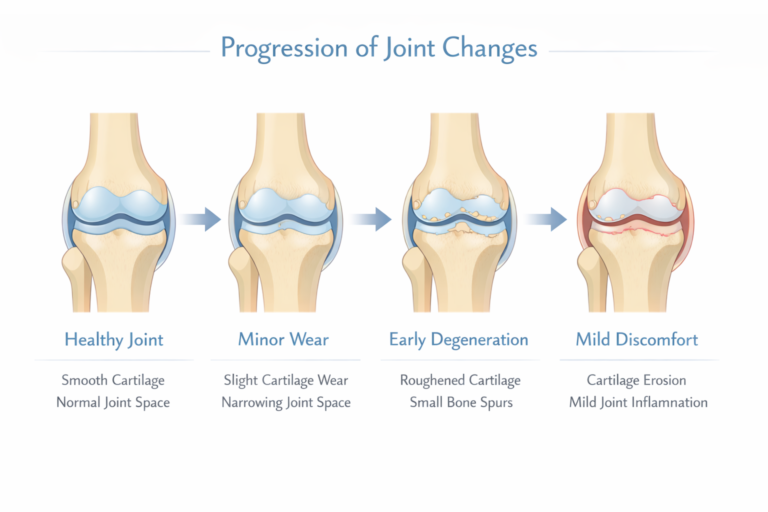
Many people experience a subtle change in joint comfort long before it becomes disruptive. Movements that once felt automatic may start requiring more awareness, stiffness may linger longer, or recovery may feel slower. This progression is often dismissed as “normal,” yet it represents meaningful feedback from the body.
Understanding what drives this shift—how cartilage resilience, joint fluid circulation, and movement patterns interact—helps transform uncertainty into clarity. When you recognize these early signals, joint wellness becomes less about reacting to discomfort and more about restoring confidence, control, and informed direction.


Beyond the Joint: A Systemic View


Joint wellness does not exist in isolation. Each joint functions within a connected system where posture, muscle balance, circulation, and nervous system signaling influence how forces are distributed during movement. A limitation in one area can quietly increase stress elsewhere, often without immediate awareness.
By learning how your body organizes and supports movement as a whole, joint care shifts from localized attention to systemic understanding. This perspective empowers smarter, more constructive choices—ones that respect how stability, mobility, and coordination work together to sustain comfortable, efficient motion.

An overview of how the body’s natural processes adapt over time.


Your body is not passive; it is constantly adapting, repairing, and recalibrating based on the information it receives. Modern research highlights clear, evidence-guided strategies that support joint function by working with these natural processes rather than overriding them.
When joint wellness is approached through understanding, consistency, and appropriate support, fear gives way to confidence. By aligning with your body’s built-in intelligence, the path forward feels safer, clearer, and grounded in trust—allowing progress to unfold without pressure or uncertainty.

Clarity Creates Confidence


The goal is not a quick fix, but steady, informed progress that respects how your body actually responds to support over time. When you clearly understand where you are today—and what options align with your needs—uncertainty naturally begins to fade.
Clarity transforms scattered information into practical insight. It replaces hesitation with direction and allows confidence to emerge without pressure. From this place of understanding, the next step feels logical, calm, and aligned with your personal wellness journey—guided by knowledge rather than impulse.

Because joint wellness varies from person to person, some readers choose to begin with a brief self-assessment to reflect on their own habits and goals.
For those who prefer visual explanations, an optional educational video is available that outlines joint wellness concepts in more detail.
An optional educational resource is available for readers who want a structured overview of joint wellness topics and commonly discussed support approaches.
Ready for the Next Step? Begin Your Joint Wellness Journey.


Disclaimer: This website is for educational and informational purposes only. It does not provide medical advice, diagnosis, or treatment. Content is intended to support informed decision-making and long-term wellness awareness.
